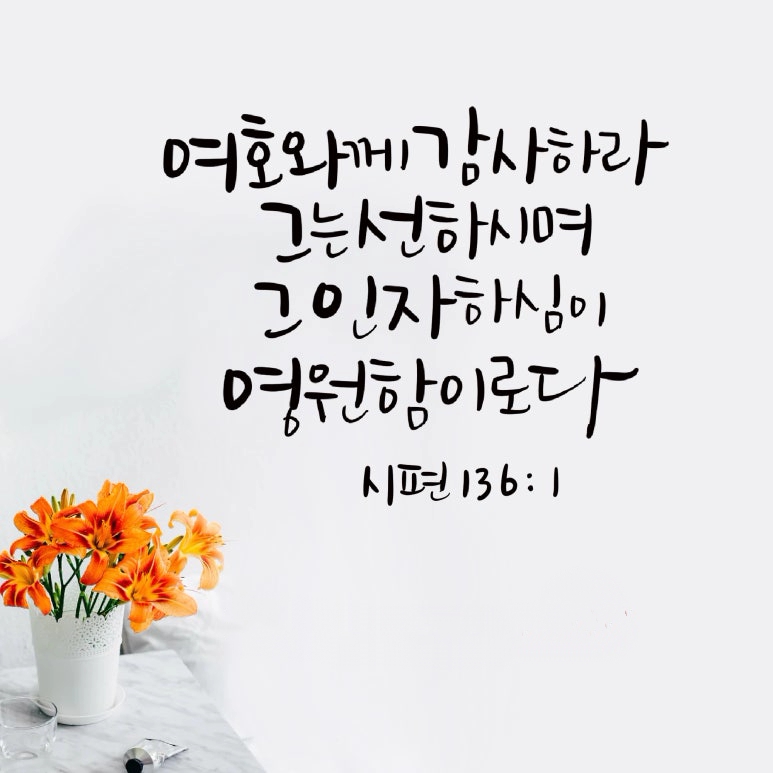
Psalm 136:1 Meditation - The Eternal Steadfast Love
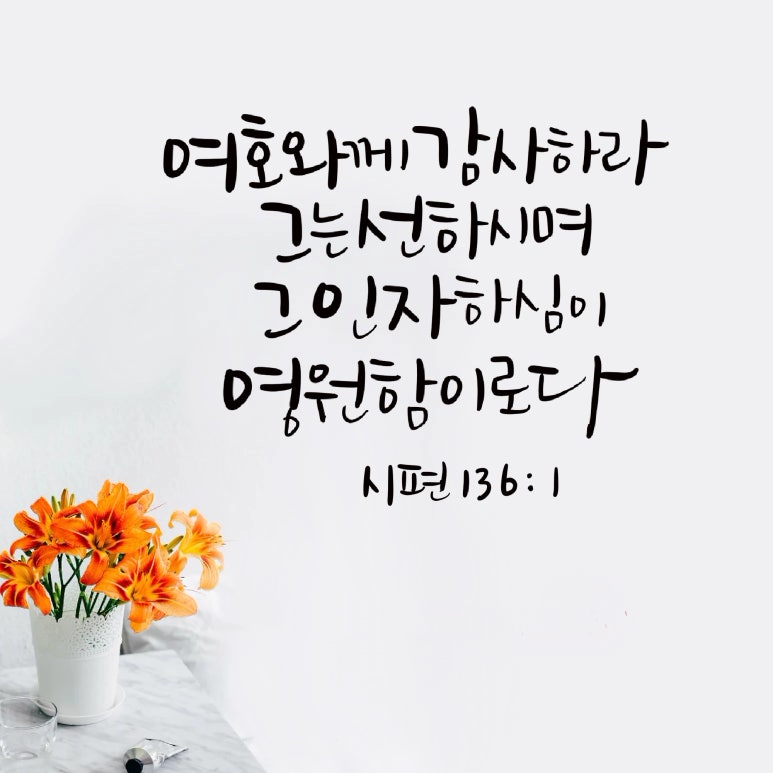
"O give thanks unto the LORD; for he is good: for his mercy endureth for ever."
From its very first verse, Psalm 136 turns the heart of the believer toward God. The Hebrew original begins with "Hodu la'Adonai ki tov ki le'olam chasdo" (הוֹדוּ לַיהוָה כִּי־טוֹב כִּי לְעוֹלָם חַסְדּוֹ). Here, the word "hodu" (הוֹדוּ) is more than a simple expression of thanks—it is an imperative calling the community to lift its voice together in praise to God. In the place of worship, the believer is invited not to confess God's goodness alone, but together with others.
The word "tov" (טוֹב) points to God's essential goodness. This is not a human goodness that shifts with circumstance, but God's very character, unchanging from creation until now. In the Wesleyan theological tradition, this goodness of God flows into prevenient grace—reminding us that God's goodness came seeking us even before we knew Him.
Yet the center of this verse is "chasdo" (חַסְדּוֹ), His steadfast love. Chesed is not merely an emotion but a faithfully kept covenant love. Human love wavers with circumstance and feeling, but God's chesed—repeated twenty-six times by the psalmist in this very psalm—never changes throughout eternity. The fact that this refrain itself was used as a responsive song in Israel's corporate worship shows that faith is not merely private sentiment, but a communal confession made together.
Even today, the Holy Spirit uses this word to newly impress upon the believer's heart the faithfulness of God. When life's circumstances shake and the future feels uncertain, what the believer must hold onto is not their own emotions or situation, but God's steadfast love, which endures forever. This is the grace that Wesley emphasized through the means of grace—the Word, prayer, and worship—experienced anew each day.
This verse also presents thanksgiving as the starting point of the life of faith. Thanksgiving is not something offered only after circumstances improve; it is a confession of faith offered in advance, because we already know God's character. When the believer remembers and gives thanks daily for God's goodness and steadfast love in the midst of ordinary life, that thanksgiving becomes, in turn, a strength that upholds the believer's life.
In the end, Psalm 136:1 contains the entire structure of faith within a single short verse. God is good; that goodness is revealed as steadfast love; and that steadfast love is eternal. The believer who holds fast to this truth stands on an unshakable rock, even in the midst of a shaking world.
Questions for Reflection:
1. When was a specific moment you experienced God's "eternal steadfast love" in your life today?
2. What decision of faith is needed to be able to give thanks first, even when circumstances are not good?
3. As a believer who has experienced God's chesed (steadfast love), to whom can you pour out that love?
Let Us Pray:
Lord of steadfast love, unchanging forever, help us hold fast to that love today and grant us faith to give thanks beyond our circumstances.
In Jesus' name we pray. Amen.
p.s: Pastor Kim, Jinju Chungman Church
'John's Meditate' 카테고리의 다른 글
| Philippians 3:10 Meditate - Knowing Christ (0) | 2026.07.06 |
|---|---|
| Proverbs 29:25 - Meditation: Fear and Trust (0) | 2026.07.04 |